
Inside Noble County's Most Wanted Program
The Noble County Sheriff's Department homepage offers the county's official route into the outside program. Two labels lead there: "Most Wanted" and "Search Outstanding Criminal Warrants in Indiana." Noble County adds no roster of its own. The program serves one purpose: public awareness and tips. It spotlights selected matters, not every open court warrant. Treat any entry as a lead. A listing can linger online after an arrest, surrender, recall, or correction. The official display is not a court-certified statement of current status, either. View it directly so context, warnings, and agency updates stay together. For an actual status answer, court records govern.
Noble County Most Wanted Links, Not Copies
Start at the sheriff's homepage. It shows which public product the agency endorses right now, and from there the official Indiana's Most Wanted program is the route. Details like fields, filters, update cycle, and disclaimers belong to that outside service rather than to any Noble County description. The county page leaves selection questions open, too. It does not say how a case earns a spot, how often entries are reviewed, or whether a reward backs each one. Those gaps matter. "Most wanted" is a curated public-awareness choice. An "active warrant" is legal process not yet marked served, recalled, quashed, or closed. The two terms answer different questions. Never treat the program as a complete Noble County warrant check.
Note: Open the sheriff-linked source for its current roster and warnings; do not rely on a saved image, copied post, or old search result.
How Noble County Most Wanted Lists Work
Criminal process starts at the court. The clerk records it in the case file. The sheriff or another authorized agency then receives the warrant and verifies it for service. A most wanted program may pick up the case later for public tips. Plenty can change after that. Service, arrest, surrender, or a judicial recall can close the warrant. The web entry can lag behind. Noble County's official pages publish no selection standard and no fixed update schedule. They never claim that dropping off the program ends the underlying case. A warrant can be recalled while the charge continues. Or it is served, followed by a hearing, release terms, and later court work. Current legal status rests with the issuing court and law-enforcement records, not with a screen capture.
Noble County Most Wanted Tip Route
The sheriff's official contact page lists Noble County Crime Stoppers at (800) 431-2330. That phone line is the published channel. The county site offers no web form or app. Reward amount, payment method, and anonymity policy also go unstated, so ask the operator. Follow the directions you receive. Share only what Noble County's program requests.
- Call the published Crime Stoppers number from a safe place.
- Give a clear location, time, and useful facts without approaching anyone.
- Follow the call taker's instructions and note any reference number provided.
- Leave observation, contact, detention, and warrant verification to law enforcement.
Safe tip: Report useful facts and step away. Never confront, follow, restrain, or try to serve process on a person shown by an official program.
Federal Warrants and Noble County Tips
Federal and county tip lines are not interchangeable. Noble County sits in the Fort Wayne Division of the U.S. District Court for the Northern District of Indiana. The U.S. Marshals Service Northern District page lists Noble County within the Great Lakes Regional Fugitive Task Force coverage area. It also posts a 24-hour federal tip line, 1-888-869-4589. Its safety rule is blunt. Do not approach the person. Use the federal channel for a federal fugitive or task-force matter. Noble County Crime Stoppers handles local tips. Unsure of the jurisdiction? Hand officials what you know and let them route it. The Marshals page describes the federal program only, with no local roster.
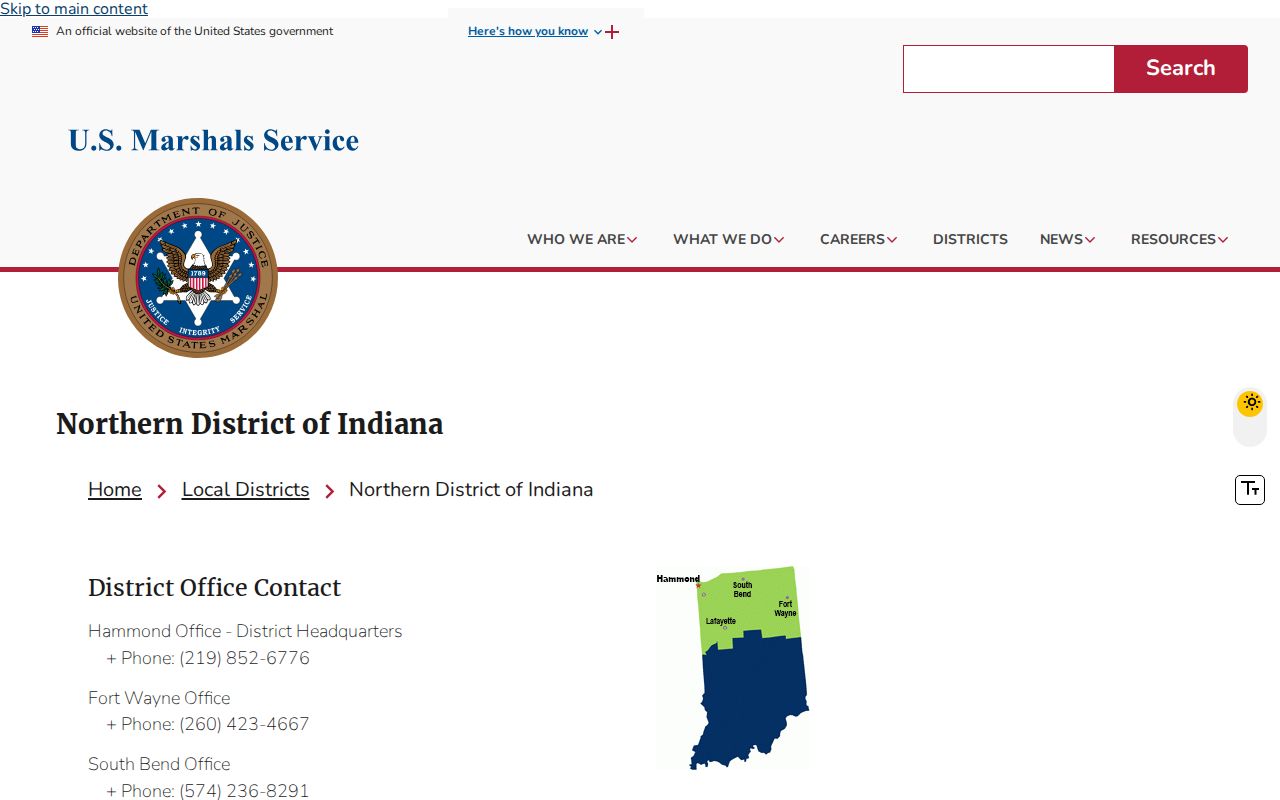
The federal district frame helps separate a U.S. Marshals lead from Noble County sheriff and court channels.
Sending a Most Wanted Tip Safely
A tip should carry firsthand facts. Think a current place, a vehicle description, a direction of travel, a time. It reports what you saw, not a conclusion. Common names and old images create real risk. Noble County police can check restricted systems the public cannot reach. Call 911 for an emergency. For non-emergency program questions, use Noble County Crime Stoppers. The sheriff's main number is (260) 636-2182. The jail line is (260) 636-6404. Each number does a different job. A location tip is not a custody question for the jail, and the sheriff line is not a dedicated warrant desk.
How Most Wanted Differs From an Active Warrant
Two public concepts coexist here. CaseLook provides a Noble County court active-warrant list with a limited row schema. The sheriff links to a curated most wanted and outstanding-warrant product built for awareness and tips. Neither shows every case's full status.
| Point | Most Wanted Program | Active Warrant Record |
|---|---|---|
| Purpose | Selected public awareness and tips | Track court-issued process |
| Scope | Curated subset | Broader public court index, still limited |
| Local route | Sheriff link and Crime Stoppers | CaseLook, MyCase, clerk, and sheriff |
| Current status | Must be checked by officials | Must be checked by court or sheriff |
| Safe action | Send a tip, never approach | For your own record, seek counsel |
Noble County Has No Statewide Warrant Roster
Indiana's MyCase system can flag a warrant event inside a public case summary. It is not a warrant search. No public website searches every arrest warrant statewide. The sheriff-linked program does not lift that limit, since it is a vendor's awareness channel rather than a master state database. Restricted Noble County records also stay out of public view. Confidential, sealed, expunged, juvenile, and protected-person files may be missing, and a curated list skips cases nobody selected. A blank listing there means only that no entry was seen. It does not certify that no Noble County, out-of-county, or federal warrant exists.
Checking Your Own Noble County Warrant
Start at the Noble CaseLook landing page, which posts a Warrant List, Record Search, and Hearing Calendar. Open the case number in MyCase next, if public. A visible warrant row lists name, birth date, issue date, and case number. It does not show the charge, bond, judge, warrant type, or serving agency. Then call the Clerk of the Noble County Courts. The number is (260) 636-2736, or write clerk@nobleco.gov. Circuit and Superior I staff share (260) 636-3205. Superior II uses (260) 636-2129. Ask whether process is active, which court issued it, whether bond is endorsed, and what the court requires. The Noble County active warrant process explains the broader court index.
When You Believe You Are Listed
Skip the tip line for your own case. Talk to a lawyer first. Then confirm the warrant through the issuing court and the Noble County Sheriff's Department. Court staff can explain procedure. They cannot give legal advice. Expect the court to require a new setting, an attorney's motion to recall or quash, bond, or voluntary surrender. Noble County posts no online clearing form, amnesty program, or walk-through process. The Noble County court FAQs tell anyone who believes a warrant exists to turn in at the Sheriff's Department as soon as possible. Call the sheriff and jail first for current intake, identification, and warrant-endorsed bond instructions. Surrender, payment, or release does not dismiss the case. Get the next date, then confirm the court and public records were updated.
Act safely: Consult an attorney and call the sheriff before surrender. Do not approach a listed person or try to resolve a warrant through Crime Stoppers.
Noble County Program Limits
The Noble County sheriff's page lists the Crime Stoppers number. No reward range appears. There is no published release schedule, feature cadence, selection score, or anonymity promise. Ask the operator how tips and rewards work. Don't borrow another county's customs to fill the gaps. Noble County also runs no warrant roundup, safe-surrender week, fee waiver, or amnesty event. Ordinary court and sheriff procedures remain the documented route. Keep a tip apart from a status check. A tip hands law enforcement facts about something observed now. A status check asks whether a court order exists and what the issuing judge requires. CaseLook, MyCase, the Clerk of the Noble County Courts, and the sheriff each hold one piece of that answer. Crime Stoppers recalls no warrants. It sets no bond, gives no legal advice, and certifies no case closed. Those boundaries help a Noble County resident pick the right channel without spreading a stale roster or a private record.